How I Learned System Design: From Total Confusion to Architectural Clarity
By ASTROQODELABS
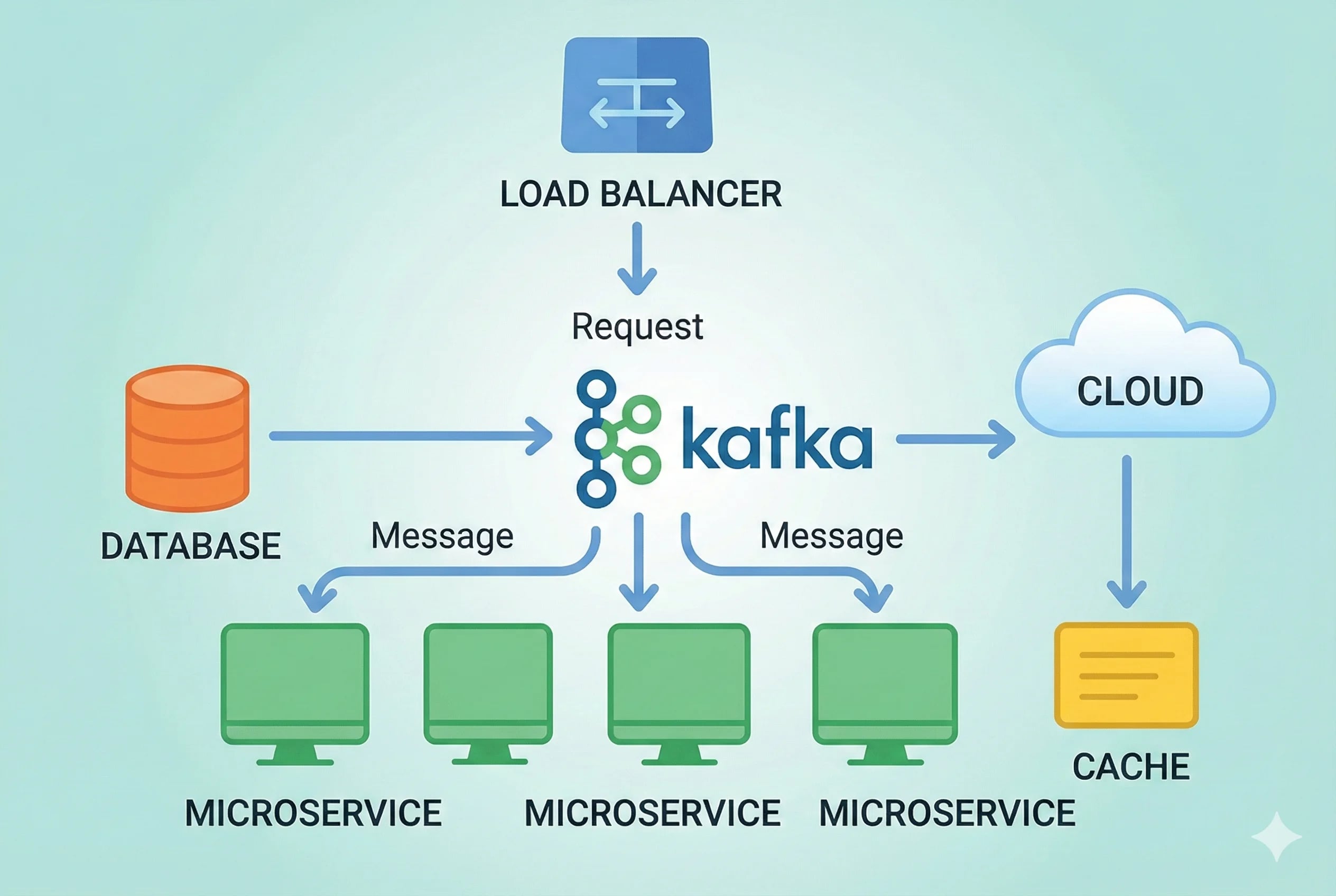
System Architecture: Load Balancer distributing requests through Kafka to Microservices
Executive Summary
System Design is often the most intimidating hurdle for software engineers, shrouded in complex jargon and reserved for "senior" architects. This article chronicles a personal journey from freezing up in an interview to confidently architecting scalable systems. It breaks down the learning process into 7 actionable steps—from mastering the basics of Load Balancers and Sharding to applying these concepts in real-world production environments—proving that architectural mastery is a skill, not magic.
The "Freeze" Moment: Why I decided to master System Design.
Let me be brutally honest: there was a time I skipped every video or blog post that had "System Design" in the title. I convinced myself that this was a domain reserved for gray-haired architects and Principal Engineers, not for me.
I was wrong.
The reality check hit me during an interview. The interviewer asked a standard question: "Can you design a ride-sharing app like Uber?" I froze. I stammered something about REST APIs and MySQL, and then... silence. I had no clue how to handle scale, no idea how to manage queues, and certainly no strategy for storing real-time location data.
That day, I decided that would never happen again. This is the story of how I went from being totally lost to confidently discussing distributed architecture.
Step 1: The Mindset Shift: Accepting that confusion is part of the process.
System Design is intimidating because of the vocabulary. People throw around terms like "Sharding," "CQRS," "Load Balancer," and "Eventual Consistency" as if they are basic English.
My first breakthrough wasn't technical; it was psychological. I realized that System Design isn't a single chapter you finish in a week. It is a complex mix of data flow, service communication, and fault tolerance. Once I accepted that everyone feels lost at the beginning, the pressure lifted. I stopped chasing perfection and started focusing on small, incremental wins.
Step 2: The 4-Pillar Roadmap: Breaking the monolith into manageable mini-topics.
To tackle the beast, I had to dissect it. I realized System Design is just a set of interconnected building blocks, so I created a learning map divided into four "mini-topics":
a) The Basics
Before designing Netflix, I needed to understand what happens when you type a URL into a browser.
DNS: It's just the phonebook of the internet.
Load Balancers: The traffic cops ensuring servers don't crash.
Protocols: Understanding why video apps use UDP while banking apps rely on TCP.
b) Data and Storage
I learned the hard way that choosing a database is about trade-offs. In one project, we chose MongoDB for transactional data and regretted it later. You must understand:
• SQL vs. NoSQL
• Indexing and Sharding
• Replication strategies.
c) Scaling Techniques
This was the fun part—moving from "works on my machine" to "works for millions."
Vertical vs. Horizontal Scaling: Buying a bigger machine vs. buying more machines.
Caching: Using Redis or Memcached to save the database from melting down.
d) Architecture Patterns
This explained why companies like Netflix use microservices. It wasn't just a trend; it was a necessity for scale. I dove into:
• Monolith vs. Microservices
• Event-Driven Architecture (Pub/Sub)
• Message Queues (Kafka, RabbitMQ).
Step 3: Active Learning: Why watching mock interviews beats watching tutorials.
I stopped watching polished tutorials and started watching Mock Interviews. When you watch an expert struggle, backtrack, and justify their choices in real-time, you learn how to think, not just copy.
Channels that became my go-to resources included:
Gaurav Sen: Excellent for explaining concepts from the ground up.
Exponent: Their mock interviews with real candidates are gold for understanding the interview dynamic.
ByteByteGo: Their visual storytelling approach makes complex concepts stick.
These resources taught me to ask clarifying questions first (e.g., "Is this system read-heavy or write-heavy?") and to always discuss trade-offs.
Step 4: Visual Thinking: How sketching solved my bottlenecks.
One surprising habit changed everything for me: Drawing. I'm no artist, but sketching the request flow on paper made the abstract concrete. When you draw a line from a Client to a Load Balancer to a Database, you immediately see the gaps.
• Where does the cache go?
• What if this line breaks?
• Is this synchronous or asynchronous?
Visualizing the flow allowed me to spot bottlenecks that I would have missed in code.
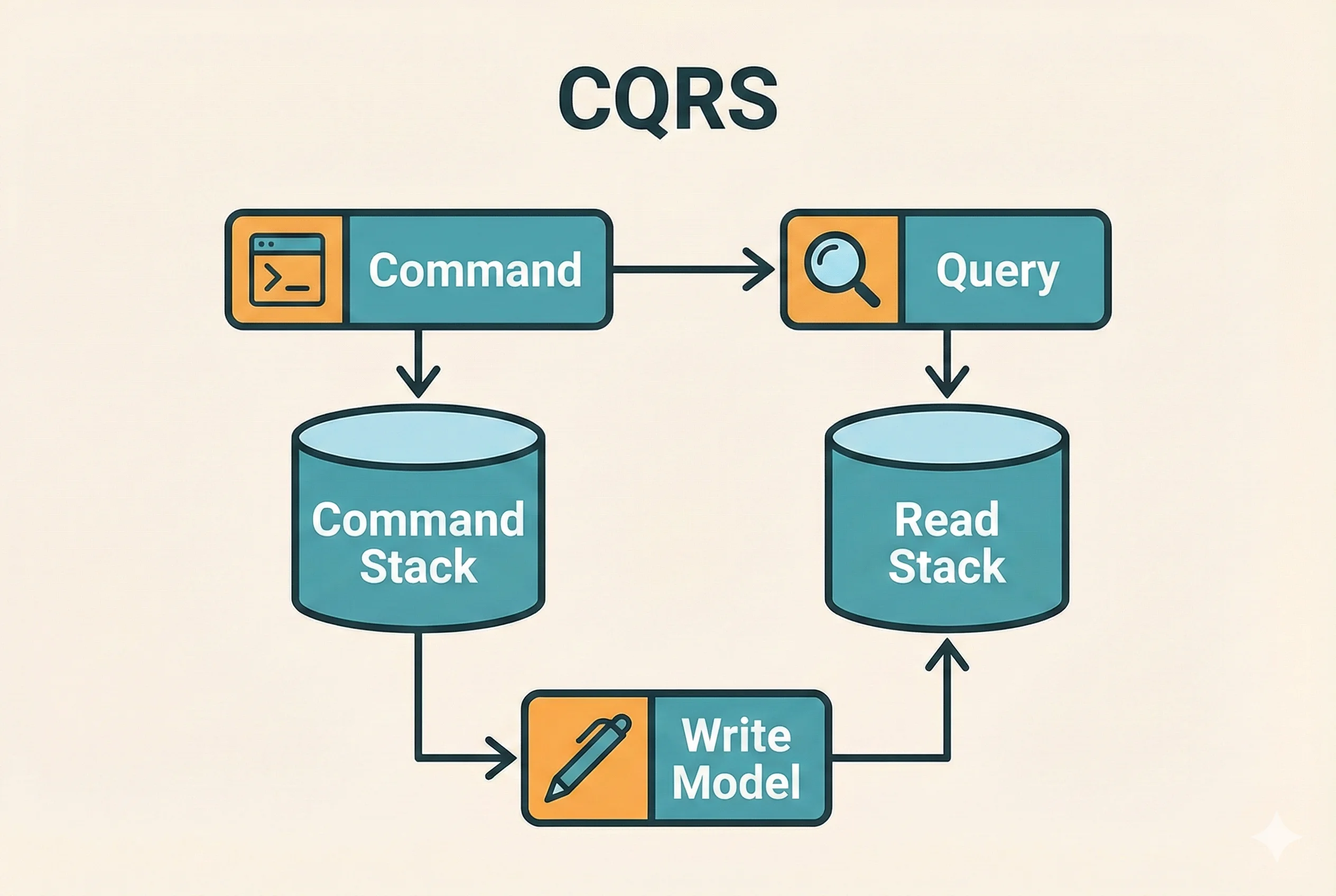
CQRS Pattern: Separating Command (Write) and Query (Read) operations for better scalability
Step 5: Practice & Application: Moving from theory to real-world engineering.
Once I had the basics, I started practicing with real-world giants. I would sit down and attempt to design:
WhatsApp: To understand real-time messaging and queues.
YouTube: To understand CDNs and BLOB storage.
Instagram: To understand feed generation (Fan-out on Read vs. Write).
For each system, I wrote down Functional Requirements, Non-Functional Requirements (latency, availability), and rough capacity estimations.
Step 6: Applying It at Work
Theory is useless without application. I was working on a high-traffic service for EMI generation, which gave me the perfect testing ground. I applied my new skills by:
• Breaking a monolith into smaller services.
• Implementing Kafka for asynchronous communication.
• Introducing retry mechanisms and Dead Letter Queues.
It wasn't perfect, but it was resilient. This confirmed that System Design is a real, valuable skill that helps your team and your product, not just something for interviews.
Step 7: The Teacher's Paradox: explaining it to others to master it yourself.
The final level of mastery was explaining it to others. I started mentoring juniors and writing articles. I realized that if I couldn't explain "Database Sharding" simply to a junior developer, I didn't actually understand it myself. Teaching forced me to fill the gaps in my own knowledge.
Conclusion: It's not about the answer; it's about the approach.
My Honest Advice
If you are starting today, remember this: System Design is not magic. You don't need 10 years of experience.
• Start with the basics.
• Ask "Why?" behind every technology choice.
• Practice weekly.
It's not about having the perfect answer—it's about your approach. When you can explain the scale, identify the bottlenecks, and justify the trade-offs, you are no longer just a coder; you are an architect.